
2026-09-20 · Rick Bauer
How Wisconsin Winters Push Mice Indoors Around Wausau
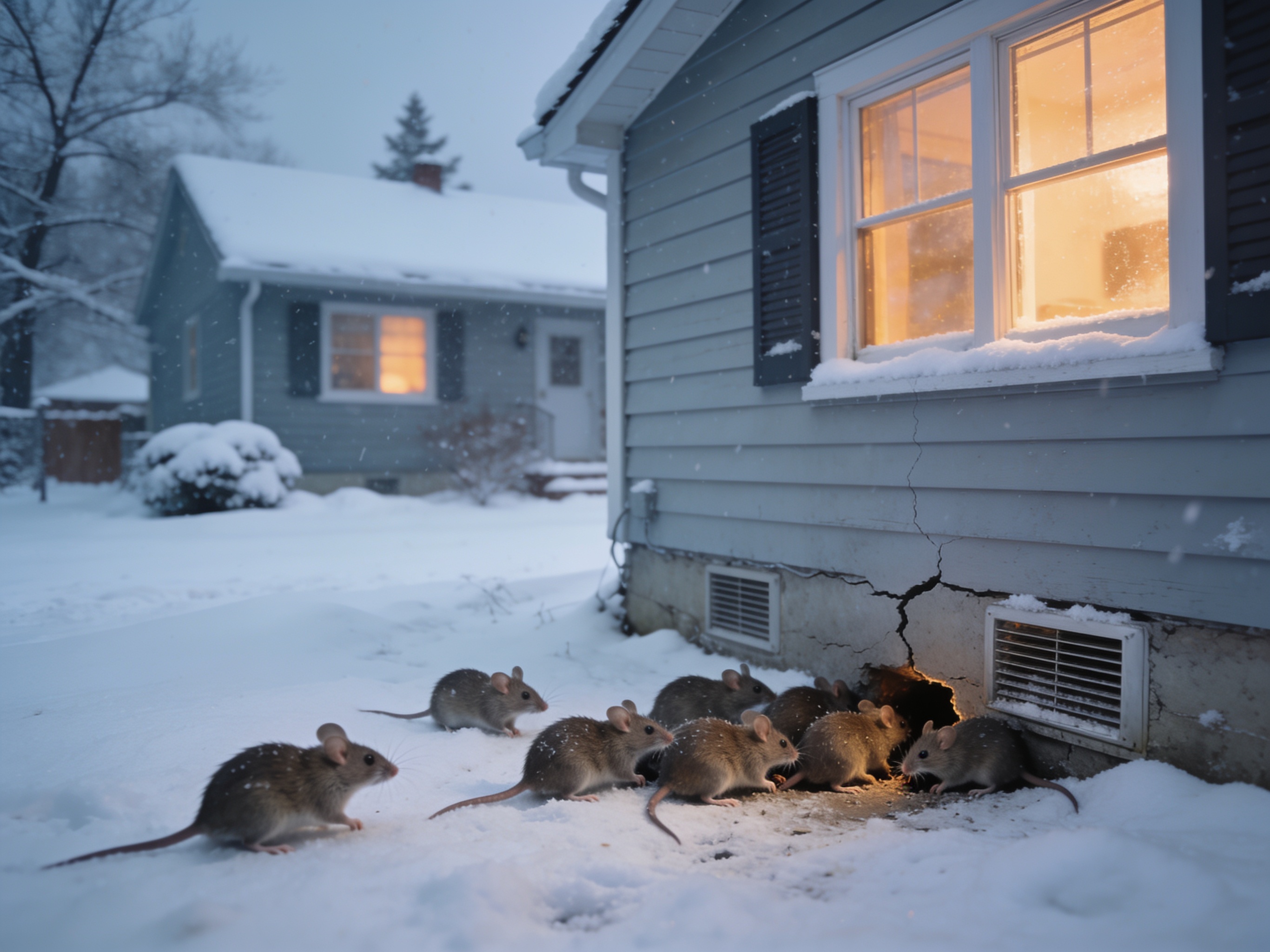
Wisconsin winters push mice indoors in Wausau once nighttime lows fall below 20°F for several consecutive nights, usually by mid-October. The humid continental climate brings extended freezes that eliminate outdoor food sources and force house mice to follow heat trails into basements and wall voids. Older homes in Downtown Wausau and along the East Side, many built before 1950 with stone foundations and settling gaps, provide the easiest access points. Mice travel from riverbanks and wooded edges near the Wisconsin River into these structures within days of the first hard frost.
Temperature Drops and Mouse Behavior in Marathon County
When temperatures in Wausau drop below freezing and stay there, mice shift from foraging in fields and river corridors to seeking consistent warmth. A single house mouse can survive on crumbs inside wall cavities for weeks once it locates an entry point smaller than a dime. In Marathon County the ground freezes solid by December, cutting off insects and seeds that sustain outdoor populations. Homes near Rib Mountain State Park see earlier pressure because mice move downslope from the state park's wooded edges as snow accumulates. The pattern repeats each year: mice enter through gaps around utility lines and dryer vents before Thanksgiving in most East Side and West Side neighborhoods.
Housing Stock and Entry Points Common in Wausau
Wausau's older housing stock, especially pre-war homes in Downtown Wausau and Schofield, features poured concrete foundations with cracks that widen after freeze-thaw cycles. Mice exploit these gaps plus openings around sill plates where siding meets the foundation. In Rib Mountain subdivisions built on sloped lots, mice follow drainage swales uphill and enter through basement windows left slightly ajar. Newer construction on the Northwest Side still experiences entry when builders leave plumbing penetrations unsealed. The Wisconsin River's periodic high water also saturates soil near riverfront homes, prompting mice to move to higher, drier indoor spaces. Rodent exclusion work addresses these exact points before winter sets in.
Neighborhood Differences Across Wausau and Nearby Towns
Mice pressure varies by neighborhood because terrain and building age differ. Homes in Athletic Park and Longfellow sit closer to green space and see more activity from field mice. Properties in Weston and Rothschild experience similar movement once corn and soybean fields are harvested. In Schofield and along the Southeast Side, older rental stock with shared walls allows mice to travel between units without going outside. Residents in Rib Mountain, WI often notice activity first in attached garages because vehicles bring in food scraps that attract mice already seeking shelter. The same cold that drives mice inside also limits their travel distance, so infestations tend to stay localized within a few blocks of wooded edges or riverbanks.
Practical Steps Homeowners Take Before Winter
Homeowners who inspect foundations and seal obvious gaps in September reduce the number of mice that reach living spaces. Checking dryer vents, cable entries, and garage doors for daylight gaps catches most common routes. Attic insulation disturbed by mice shows up as small runways and droppings near eaves. When activity is already present, targeted trapping inside wall voids works faster than waiting for temperatures to moderate. A full inspection also reveals whether mice have reached the attic, which happens frequently in two-story homes on the West Side. What a rodent inspection covers explains the checks that reveal hidden travel routes before snow falls.
Why Early Action Matters in Central Wisconsin Winters
Once mice establish inside Wausau homes, they remain active through March because indoor temperatures stay above 60°F. A breeding pair can produce multiple litters during this period if food and nesting material remain available. Sealing entry points after the first mice arrive still helps because it prevents additional animals from joining. Homeowners in Marshfield and Stevens Point report the same timeline, confirming the regional pattern tied to the same climate. Checking for signs every two weeks from October through December catches problems while populations are still small. Mice control focused on exclusion rather than repeated trapping gives longer results through the extended winter season.